
Curatorial Monographs
Deep, long-form investigations into the political, epistemological, and technological history of cartography. All monographs carry full APA 7th Edition citations and verified primary source DOIs.
The Rhetoric of the Graticule
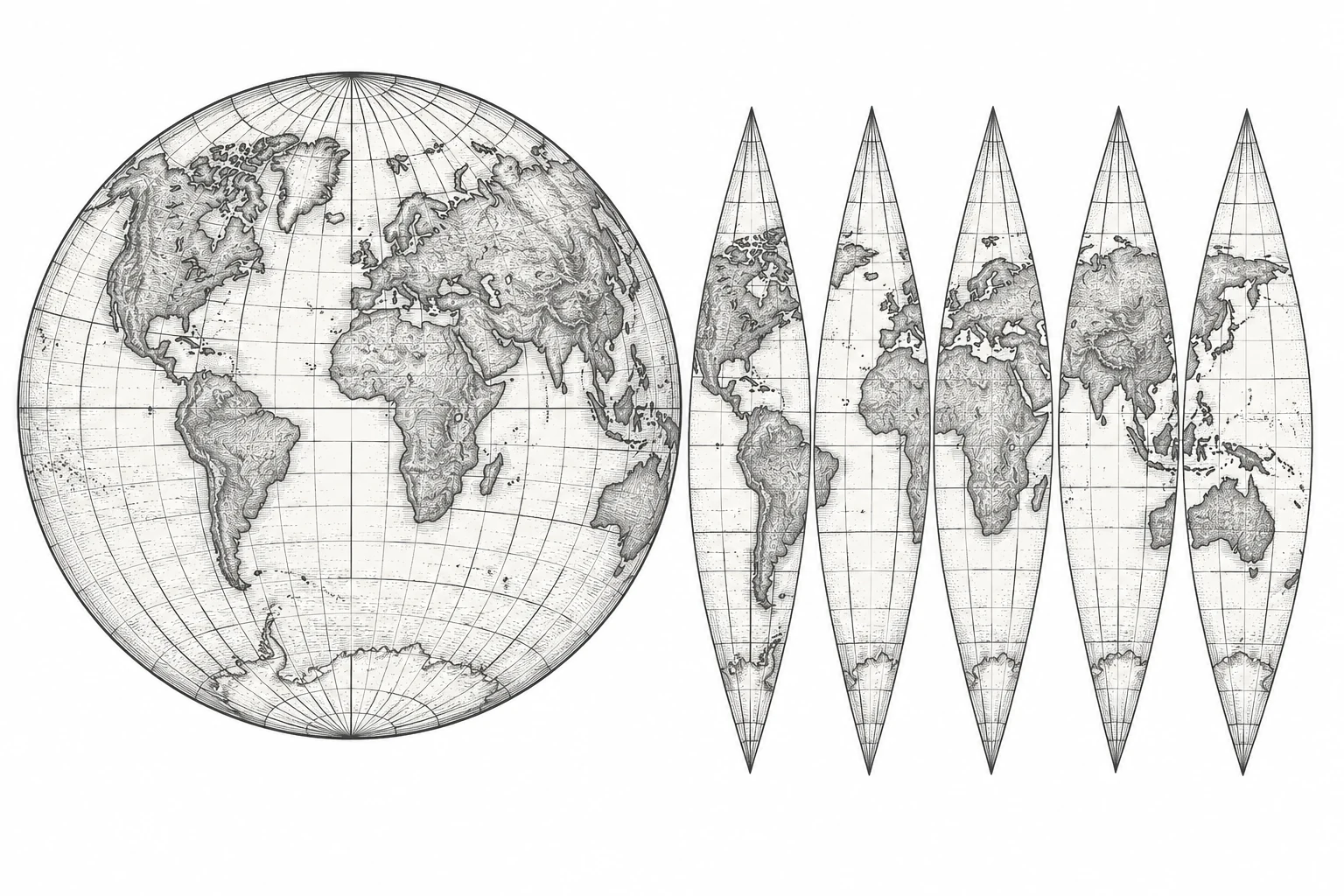
This treatise examines the mathematical graticule not as an innocent geometric abstraction, but as a technological apparatus that transformed continuous lived space into a quantifiable, partitionable, and taxable Euclidean ledger. We analyze how conformal and equal-area projections encoded imperial geopolitical priorities, tracing the legacy of Mercator's polar inflation into 21st-century digital web mercator standards.
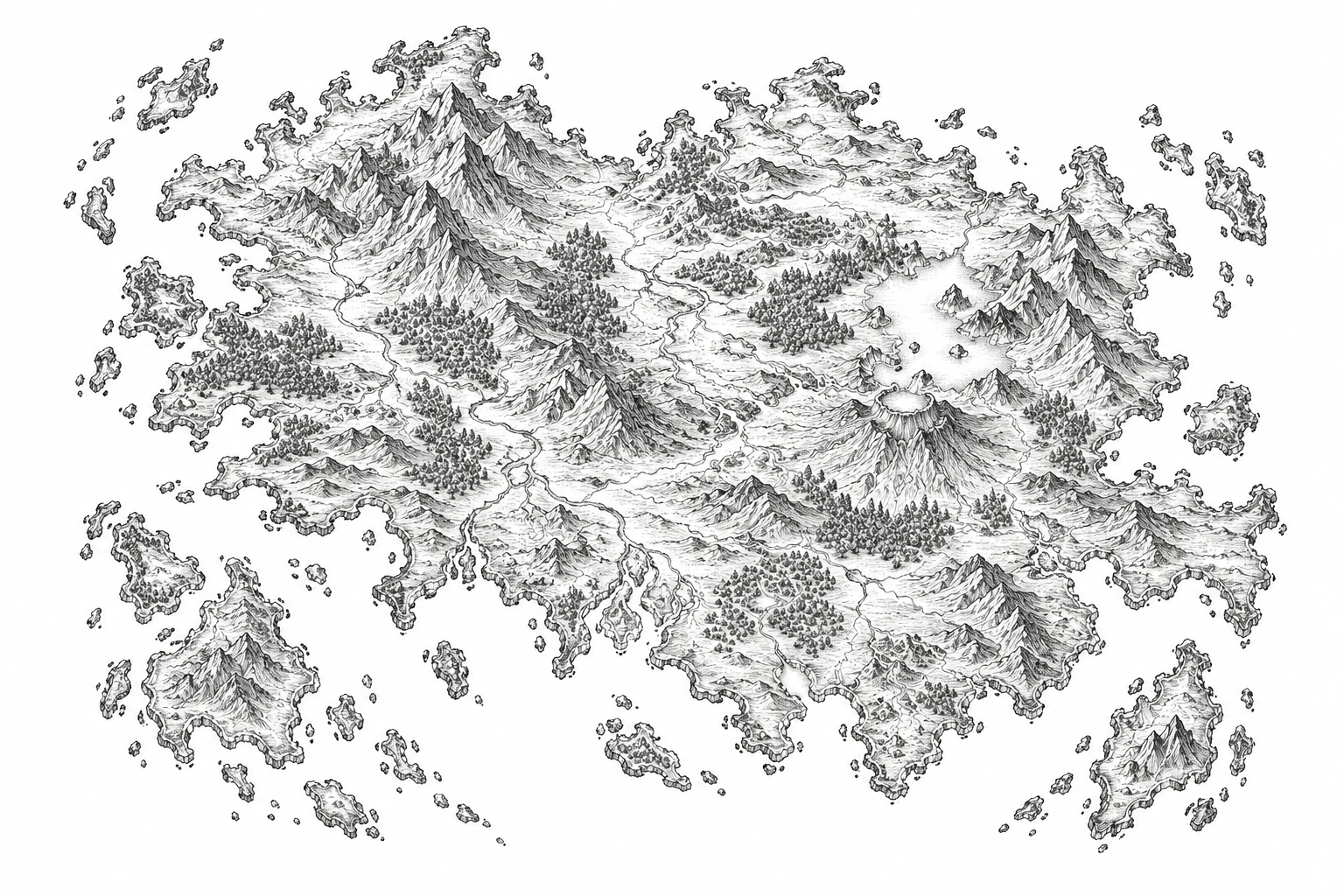
The Paper Archipelago
For centuries, phantom islands—non-existent landmasses that appeared on authoritative nautical charts—survived through the institutional inertia of maritime cartography. This monograph analyzes how pumice rafts, optical mirages, and ungrounded copyright traps were elevated into sovereign geographic realities.
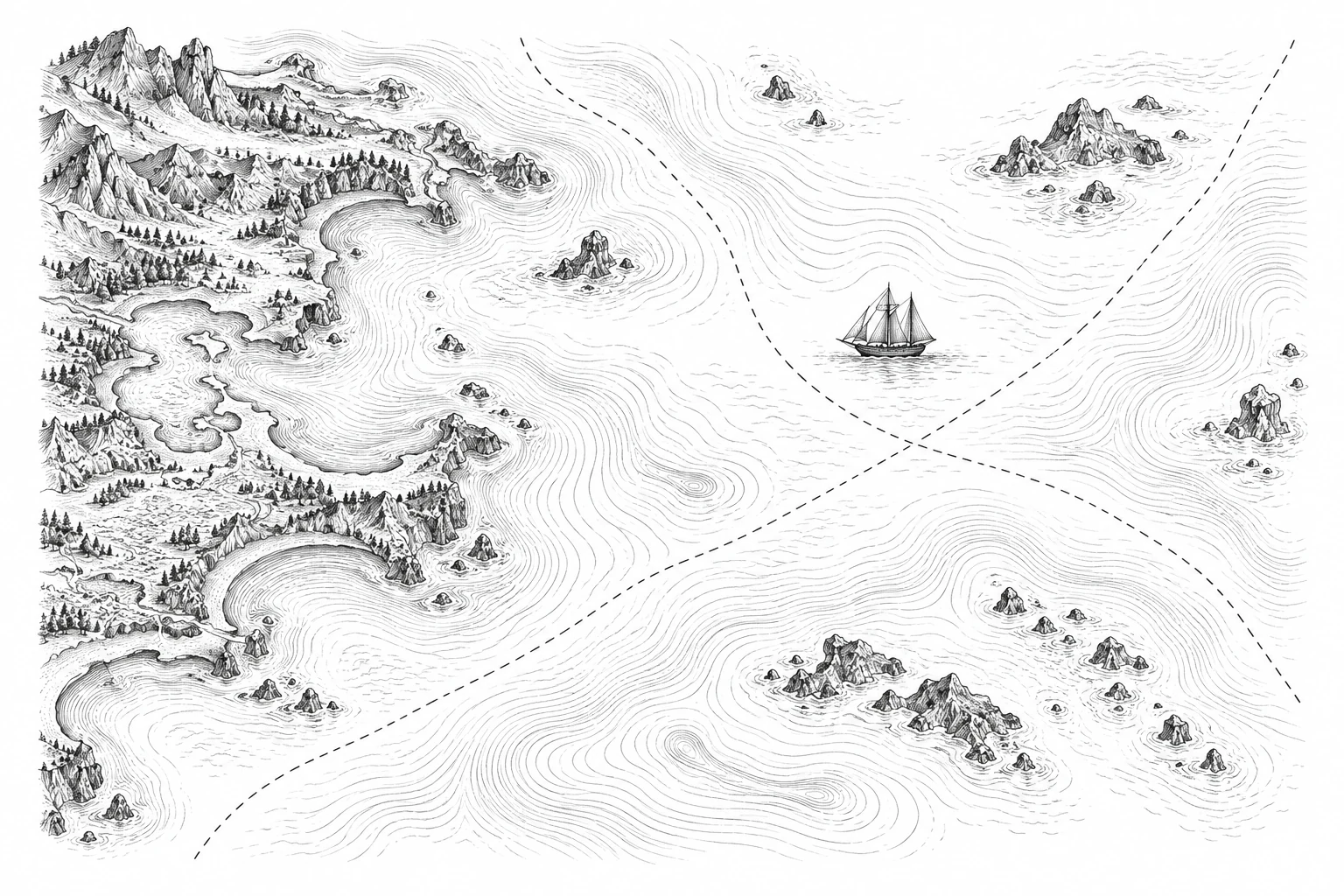
Lines on Water
The 1982 United Nations Convention on the Law of the Sea (UNCLOS) transformed ocean space from an open international commons into a strictly zoned regime of sovereign buffers. This paper explores the cartographic calculus of normal low-water baselines, archipelagic straight baselines, and extended continental shelf claims.
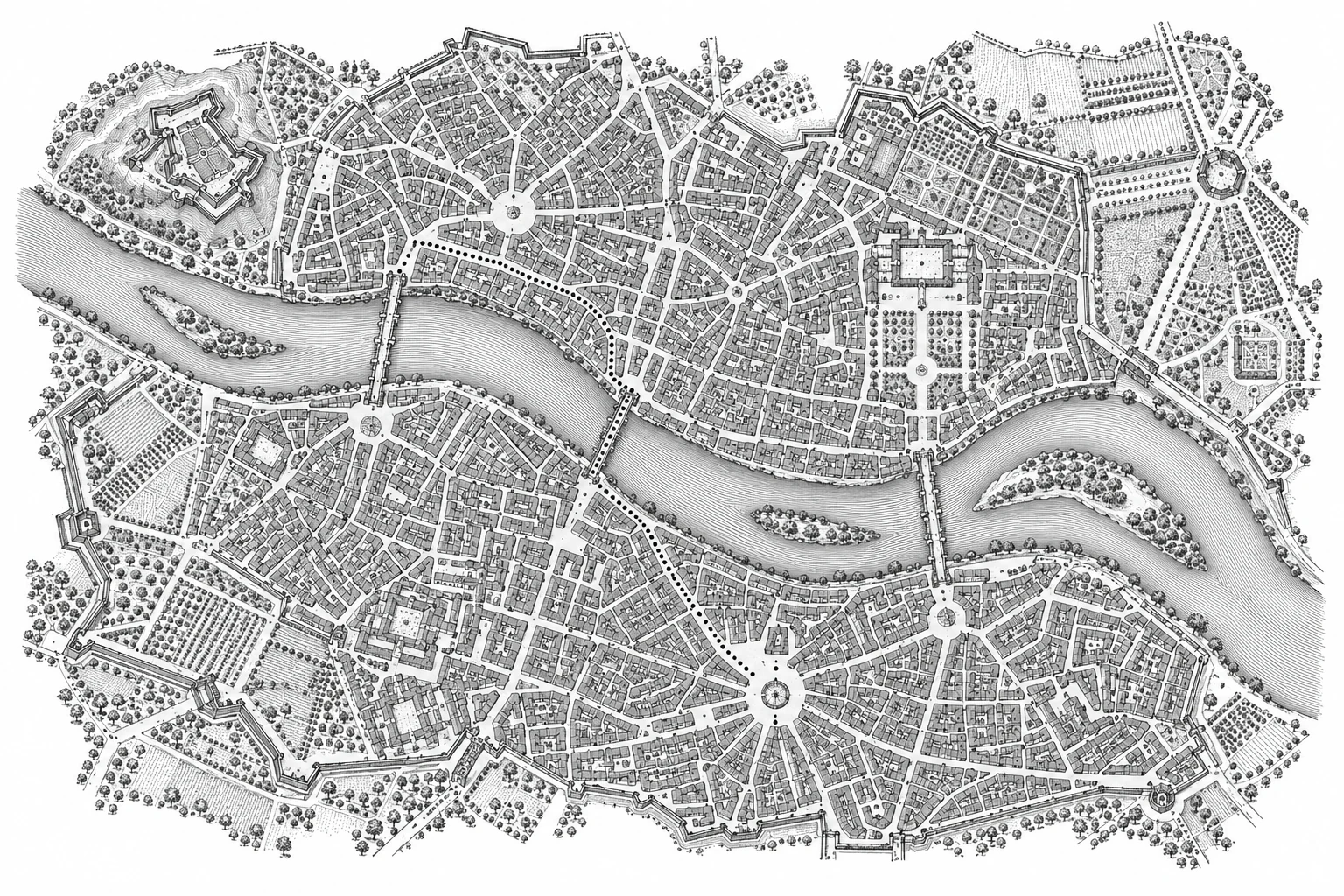
The Mind's Meridian
How do human minds construct spatial orientation in complex built environments? We trace the convergence of Kevin Lynch's five urban elements, Harry Beck's topological transit revolution, and modern cognitive psychology heuristics, demonstrating that mental space is fundamentally non-Euclidean.
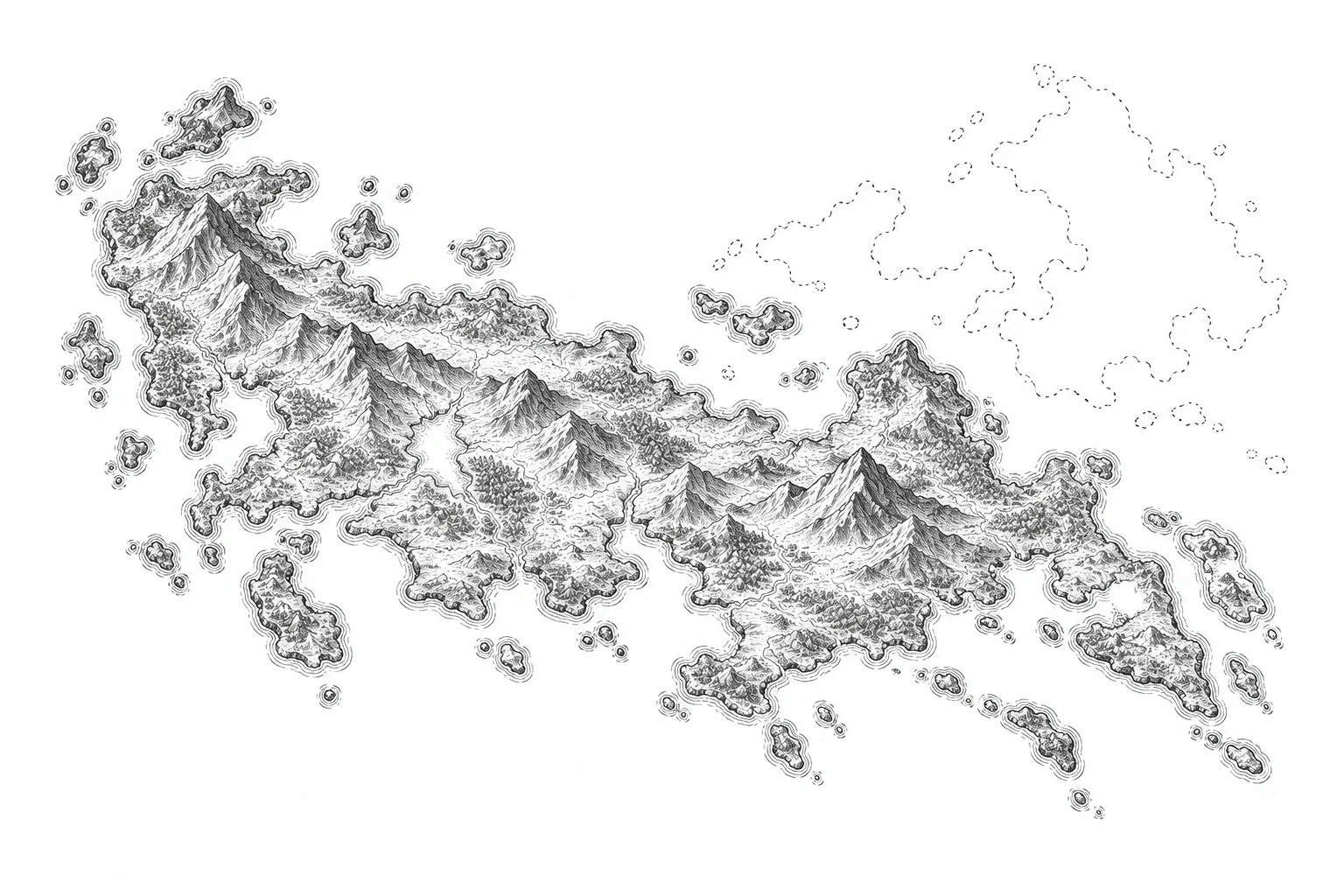
Beyond the West-to-East Spine
A critical investigation into the spatial grammar of speculative fiction maps. From Tolkien's tectonic mountain walls to Ursula K. Le Guin's archipelagic balance and FromSoftware's vertical sightlines, we analyze how spatial constraints drive literary narrative structures.
The Disappearing Basin
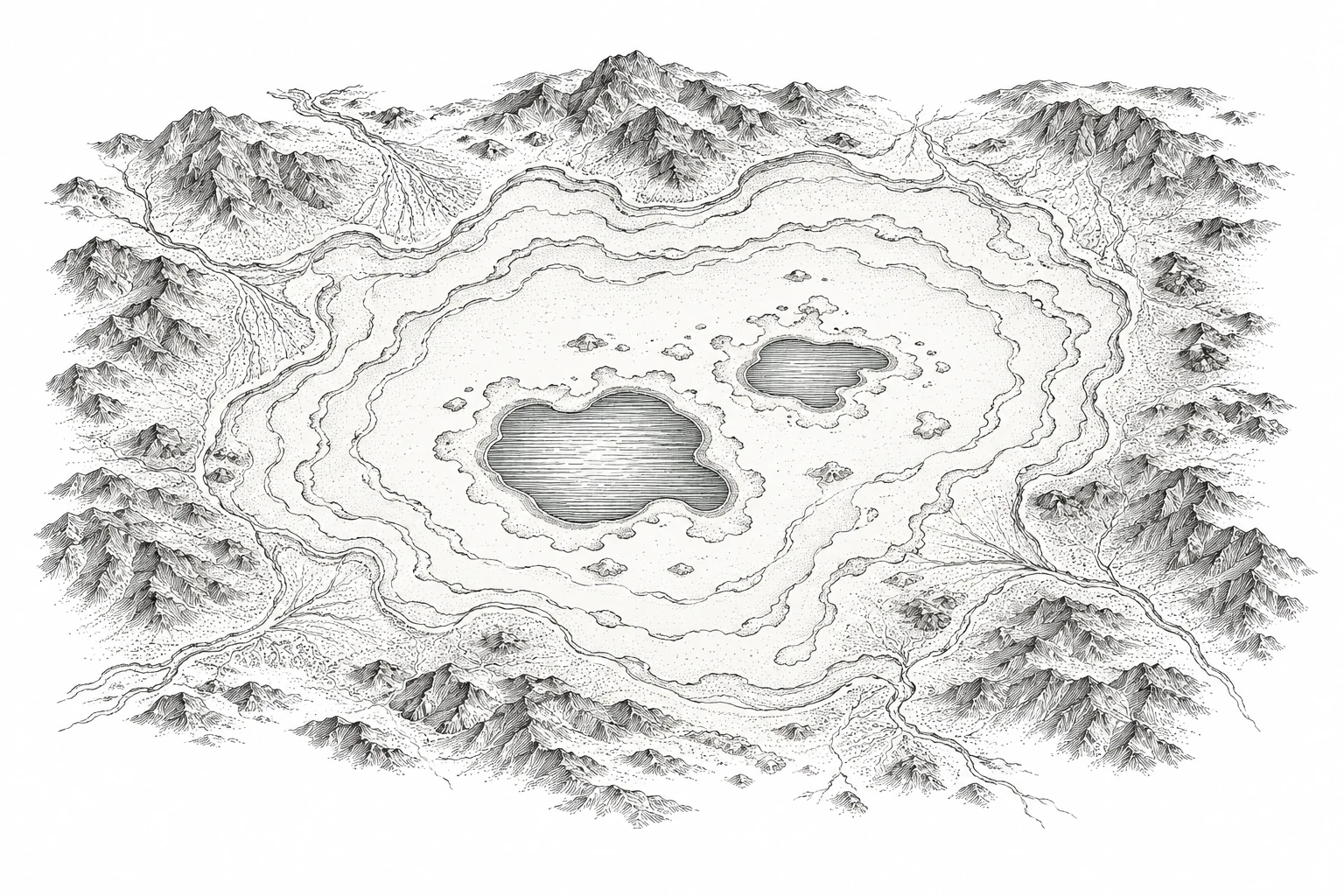
A cartographic post-mortem of the Aral Sea desiccation. We examine how Soviet river diversion turned the world's fourth largest lake into the Aralkum Desert, forcing a continuous redrawing of Central Asian international borders and ecological monitoring maps.